


A few days ago, one of my "best blogging friends", Bette, wrote this post on the subject of something called "thinspiration" and what it has to do with Audrey Hepburn. She also talked about the different body shapes of Old Hollywood stars, and since I agree wholeheartedly with what she's said, I asked her if I could do a follow up post to add in my own two cents and she gave me the okay. So here we go (and please, go check out her post if you already haven't, it's fantastic with tons of valid points).
34A - 20 - 34. 5"7. 103.
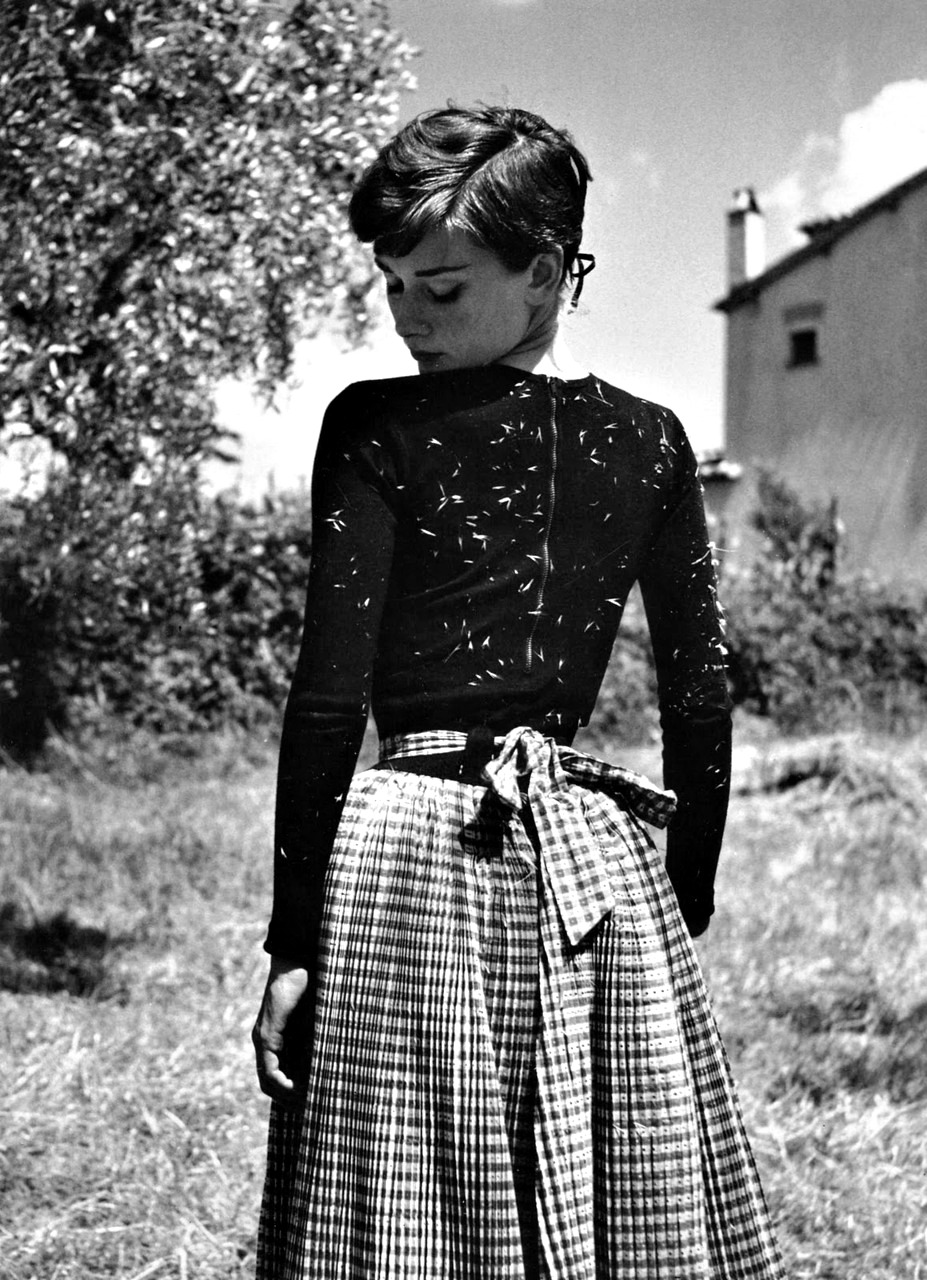
The point is however, Audrey's weight was not attributed to trying to be skinny because it was the "in" thing. And the more important fact is that this is definitely not the way Audrey Hepburn would want to be remembered. She set standards for women, but not because of her weight but rather for having such a kind personality and being one of the most committed of UNICEF spokespeople. It just goes to show you that weight shouldn't define a person.
 As a teenage girl, I can tell you this: girls my age could learn plenty about body image from the women of Classic Hollywood (amongst other things).
This is because, as I mentioned earlier, actresses actually looked like real women back then. While today much of the industry would encourage skin and bones for their leading ladies, in those days studios wanted meat on the movie queens. I remember reading a story about Constance Bennett. She had become rather skinny, to the point where her vertebrae could be seen. Whereas nowadays she might have been given a badge of honor, her studio in the 1930s became genuinely concerned about her and they tried to figure out why she had become so thin.
Of course, if you look at the inches of the waistlines these actresses had, you'd probably be surprised, especially if you matched them up with today's standard. They were incredibly tiny, giving most of the actresses as an hour glass shape. Audrey's 20 inch waist was quite common back then, with some waists measuring even smaller, for example, Brigitte Bardot's 19 inch. I have also heard that a young Elizabeth Taylor had an 18 inch waistline, but I'm not positive. (None the less, hers was also super small). However, despite these slim waistlines, most of the actresses back then were a perfectly healthy weight all the while. There are many reasons for this. For instance, in the 30s and 40s women were still wearing undergarments like girdles to trim their waistlines, because it was a still a time where tiny waists were considered particularly attractive and feminine. Also, as the years have passed, portion sizes in the United States have increased and as a result, the American demographic has become heavier and heavier. Also, people back then had much more exercise on a daily basis than we do today. Thus, obesity wasn't half the problem it is now and the average person from the 1940s would simply be smaller than the average person of today. In the past forty years, our waistlines have increased by four inches. So it's easy to understand why waistlines were so slim back then - and why the women that boasted them were still totally healthy.
However, waistlines withstanding, women in Classic Hollywood were an assortment of different sizes and shapes. A curvier, voluptuous hourglass figure like Marilyn Monroe's was well desired, and as shallow sounding as it may be to say it, she's good proof that you don't need to be stick thin to be adored by the male sex. There are many different measurements given for Marilyn's figure from several different sources, but her real measurements were most likely 36- 25 - 37. Besides Marilyn, there's Sophia Loren, also with a full figure. Her measurements were 38C - 24 - 38, and she herself said, "Everything you see I owe to spaghetti." Then there's Elizabeth Taylor, who grew up in movies, so audiences saw her blossom from a little girl into a young woman with a fabulously "curvy, petite" figure. But like any woman, as Elizabeth gave birth to children and became older, her figure became more womanly than it had been in her late teens or early twenties. In the 1960s, her shape was much fuller than it had been in the decade before but she was still hailed as one of the most beautiful women in the world.
 Besides the hourglass shape, there were plenty of other sizes and heights boasted by the woman of Classic Hollywood. Although many of these women were the average height for their time, (5"3 - 5"6, give or take), there were certainly exceptions. How about the ever so fabulously lovely Ingrid Bergman? She was very tall, for then and for today, at 5"10. And she towered over many of her leading men. She had a larger frame and the measurements of 34 - 24 - 34, and she, too, has been considered one of the prettiest woman to exist. And she loved to eat - American ice cream, butter cookies, and crawfish particularly.
Katharine Hepburn (34B - 22 - 33), too, was a tall, at 5"8. In fact, when she met Spencer Tracy, she said something along the lines of, "I'm afraid I'm a little too tall for you, Mr. Tracy." She was slim and leggy and had the shape of a natural athlete, which she was, and proud of.
There were very petite woman in Hollywood, too. If they were standing flat footed, Judy Garland and Veronica Lake would be itsy bitsy at 4"11, and other big stars like Carole Lombard and Jean Harlow 5"2. Bette Davis and Vivien Leigh, two of the most domineering screen presences, seemed very tall on screen but were 5"3 in reality, and one of my very favorites, Natalie Wood, a pint sized 5"0.
Our perception of beauty changes over time, often according to trends. Whereas ghostly fair complexions were the latest trend, today a tanned, brown tone is what's most desired. And not more than fifty years ago, tiny waists were the most beautiful, but today apparently 'waspish waistlines' are in. But one trend that I wish we could be consistent with is excepting beauty in all its different forms, shapes, and sizes. I know I sound totally and positively cliche right now, like a therapist writing in an article in a middle aged woman's magazine, but I do mean it. I don't understand how people can compare someone's beauty to somebody else's, or even have the gumption to rank them. I see lists of the 20 or 40 most beautiful Old Hollywood actresses (in a particular order) on Youtube, and I just don't get it. It's a personal opinion, certainly, but more importantly, in the way one person is beautiful may not be in the same way somebody else is. Ingrid Bergman and Greta Garbo, for example. Two totally different beauties, one's of the natural, laid-back sort and the other is of the more dramatic and vidid sort. It just doesn't make sense, or some fair, to compare.
It's not that today's society doesn't accept women's different body shapes, it just seems as if sometimes they have to make more of an effort to. Or be obvious about it. They have to make a point of saying, "Isn't she pretty for a curvy woman?" Why can't she simply be pretty? It sometimes feel our media is trying to give themselves a pat on the back for finding a woman with a fuller body shape attractive. "But skinny is best," it seems to whisper, and that's why you find so many teenage girls starving themselves to death to become just as stick thin as the model they saw on TV. No, healthy is best!

This is why I wish girls my age could look at the women of Old Hollywood. All these women are absolutely gorgeous in their individual ways. They didn't come out of a cookie cutter mold and they weren't all alike. Perhaps Classic Hollywood were fans of curves, but they weren't obsessive about this particular body shape like much of the media is today about being way too skinny, and having 'thinspiration' and all of that. I believe that as long as stars were in a healthy shape, they were appreciated by the studios and loved by the audiences alike. Nobody called Audrey Hepburn too skinny. And nobody called Marilyn Monroe fat.
I'm not trying to sanitize the studios, or say that these women were perfect people that never had any reservations about their body image, or didn't diet, etc. But I still to my guns about saying that to be quite honest, yesterday's Hollywood seemed to embrace women that looked like real people - whether they were on the slimmer side or leaned to being curvy - a lit bit easier than today's pop culture, which oftentimes seems to act like a gun's being put to their head about the varying shapes of actresses. And I think, from this, many teenage girls could learn a thing or two. They could learn that many of the prettiest, confident, healthiest ladies came in an assortment of different body types, and they were all unique because of it.
***
 |
The above numbers are the measurements, height, and weight of Audrey Hepburn. To some girls, these numbers are inspiration (or rather, 'thinspiration') to become stick thin.
Eating disorders have become much too rampant amongst teenage girls these days. As most everyone knows, they are very dangerous medical conditions that can also wreck the mental state of a person, and result in much more disastrous consequences. Eating disorders like anorexia and bulimia can spiral out of many reasons. One common factor is the media obsession with being a "perfect size 0." It's well understood that teenagers are impressionable and quite often a little too concerned with their physical image rather that when it's inside. So when teenage girls see a photo of bikini clad model or actress as skinny as a rail, they see this as pressure to be just as thin. The modeling industry makes matters worse, encouraging girls as young as twelve to diet until they become unhealthily skinny.
Back in Audrey's day, however, things were a lot different. Curves were greatly appreciated in the modeling industry and in Hollywood - in fact, they were desired. Marilyn Monroe, for example, the greatest sex symbol of the 20th century, was a curvy girl who actually looked like a woman. I once read how when a woman suggested to a young Lucille Ball, in her twenties or so, that she could become a model (this was when Lucy was pounding the pavement in New York and needed a way to put food on her plate), Lucy was appalled. Fresh out of her youth, Lucy was tall and very slim with a 21 inch waist. She did not understood how a body like hers would ever be desired or useful for the modeling industry - so ironic today, isn't it? (The woman explained to her that her body type was perfect for modeling fur coats.)
So Audrey Hepburn did not boast those numbers listed above because she wanted to be a poster child for something called "thinspiration" - not like it existed back then, though - or because she wanted to have a figure like a model (such a body like hers would be inadequate back then) and especially not because being quite thin was the "in" thing then. The reason for her particular weight has roots in her childhood in war torn Europe, and there were periods for days and days when she had little to no food. At the time, her weight dropped to ninety points, dangerously skinny for her 5"7 frame. Little light has been shed on this period of Audrey's life. This is what she herself said about the topic:
"Then, on the morning of December 24, my mother's widowed sister told us there wasn't a scrap of food left. I had heard that one could fight hunger by sleeping. Perhaps, then, I could sleep through Christmas - I would try - but first there were the stairs to my room. I tried, but I couldn't make it - I was too weak. My legs had begun to swell from edema, I was dangerously malnourished, and I was turning a frightful color from jaundice - my mother actually feared I would die from hepatitis."After the war, her weight ying-yanged. It was hard to regulate after the latter mentioned period. Did you know that at one point she was actually 150 pounds? This couldn't be considered "overweight" with her height, but it does lean towards the chubbier side. However, for most of her life (and certainly during the prime of her Hollywood career) Audrey's weight was below 110 pounds, save the occasions when she was pregnant.
The point is however, Audrey's weight was not attributed to trying to be skinny because it was the "in" thing. And the more important fact is that this is definitely not the way Audrey Hepburn would want to be remembered. She set standards for women, but not because of her weight but rather for having such a kind personality and being one of the most committed of UNICEF spokespeople. It just goes to show you that weight shouldn't define a person.
 As a teenage girl, I can tell you this: girls my age could learn plenty about body image from the women of Classic Hollywood (amongst other things).
This is because, as I mentioned earlier, actresses actually looked like real women back then. While today much of the industry would encourage skin and bones for their leading ladies, in those days studios wanted meat on the movie queens. I remember reading a story about Constance Bennett. She had become rather skinny, to the point where her vertebrae could be seen. Whereas nowadays she might have been given a badge of honor, her studio in the 1930s became genuinely concerned about her and they tried to figure out why she had become so thin.
Of course, if you look at the inches of the waistlines these actresses had, you'd probably be surprised, especially if you matched them up with today's standard. They were incredibly tiny, giving most of the actresses as an hour glass shape. Audrey's 20 inch waist was quite common back then, with some waists measuring even smaller, for example, Brigitte Bardot's 19 inch. I have also heard that a young Elizabeth Taylor had an 18 inch waistline, but I'm not positive. (None the less, hers was also super small). However, despite these slim waistlines, most of the actresses back then were a perfectly healthy weight all the while. There are many reasons for this. For instance, in the 30s and 40s women were still wearing undergarments like girdles to trim their waistlines, because it was a still a time where tiny waists were considered particularly attractive and feminine. Also, as the years have passed, portion sizes in the United States have increased and as a result, the American demographic has become heavier and heavier. Also, people back then had much more exercise on a daily basis than we do today. Thus, obesity wasn't half the problem it is now and the average person from the 1940s would simply be smaller than the average person of today. In the past forty years, our waistlines have increased by four inches. So it's easy to understand why waistlines were so slim back then - and why the women that boasted them were still totally healthy.
However, waistlines withstanding, women in Classic Hollywood were an assortment of different sizes and shapes. A curvier, voluptuous hourglass figure like Marilyn Monroe's was well desired, and as shallow sounding as it may be to say it, she's good proof that you don't need to be stick thin to be adored by the male sex. There are many different measurements given for Marilyn's figure from several different sources, but her real measurements were most likely 36- 25 - 37. Besides Marilyn, there's Sophia Loren, also with a full figure. Her measurements were 38C - 24 - 38, and she herself said, "Everything you see I owe to spaghetti." Then there's Elizabeth Taylor, who grew up in movies, so audiences saw her blossom from a little girl into a young woman with a fabulously "curvy, petite" figure. But like any woman, as Elizabeth gave birth to children and became older, her figure became more womanly than it had been in her late teens or early twenties. In the 1960s, her shape was much fuller than it had been in the decade before but she was still hailed as one of the most beautiful women in the world.

Katharine Hepburn (34B - 22 - 33), too, was a tall, at 5"8. In fact, when she met Spencer Tracy, she said something along the lines of, "I'm afraid I'm a little too tall for you, Mr. Tracy." She was slim and leggy and had the shape of a natural athlete, which she was, and proud of.
There were very petite woman in Hollywood, too. If they were standing flat footed, Judy Garland and Veronica Lake would be itsy bitsy at 4"11, and other big stars like Carole Lombard and Jean Harlow 5"2. Bette Davis and Vivien Leigh, two of the most domineering screen presences, seemed very tall on screen but were 5"3 in reality, and one of my very favorites, Natalie Wood, a pint sized 5"0.
Our perception of beauty changes over time, often according to trends. Whereas ghostly fair complexions were the latest trend, today a tanned, brown tone is what's most desired. And not more than fifty years ago, tiny waists were the most beautiful, but today apparently 'waspish waistlines' are in. But one trend that I wish we could be consistent with is excepting beauty in all its different forms, shapes, and sizes. I know I sound totally and positively cliche right now, like a therapist writing in an article in a middle aged woman's magazine, but I do mean it. I don't understand how people can compare someone's beauty to somebody else's, or even have the gumption to rank them. I see lists of the 20 or 40 most beautiful Old Hollywood actresses (in a particular order) on Youtube, and I just don't get it. It's a personal opinion, certainly, but more importantly, in the way one person is beautiful may not be in the same way somebody else is. Ingrid Bergman and Greta Garbo, for example. Two totally different beauties, one's of the natural, laid-back sort and the other is of the more dramatic and vidid sort. It just doesn't make sense, or some fair, to compare.
It's not that today's society doesn't accept women's different body shapes, it just seems as if sometimes they have to make more of an effort to. Or be obvious about it. They have to make a point of saying, "Isn't she pretty for a curvy woman?" Why can't she simply be pretty? It sometimes feel our media is trying to give themselves a pat on the back for finding a woman with a fuller body shape attractive. "But skinny is best," it seems to whisper, and that's why you find so many teenage girls starving themselves to death to become just as stick thin as the model they saw on TV. No, healthy is best!
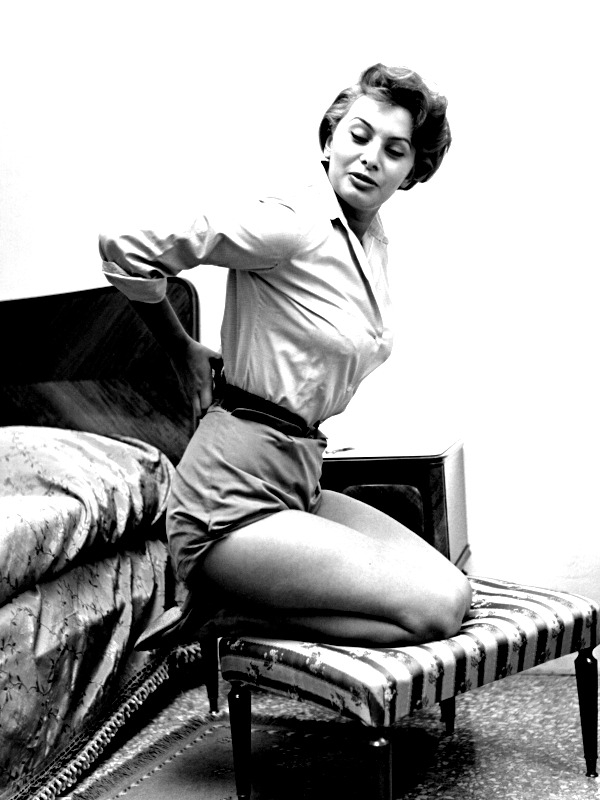
This is why I wish girls my age could look at the women of Old Hollywood. All these women are absolutely gorgeous in their individual ways. They didn't come out of a cookie cutter mold and they weren't all alike. Perhaps Classic Hollywood were fans of curves, but they weren't obsessive about this particular body shape like much of the media is today about being way too skinny, and having 'thinspiration' and all of that. I believe that as long as stars were in a healthy shape, they were appreciated by the studios and loved by the audiences alike. Nobody called Audrey Hepburn too skinny. And nobody called Marilyn Monroe fat.
I'm not trying to sanitize the studios, or say that these women were perfect people that never had any reservations about their body image, or didn't diet, etc. But I still to my guns about saying that to be quite honest, yesterday's Hollywood seemed to embrace women that looked like real people - whether they were on the slimmer side or leaned to being curvy - a lit bit easier than today's pop culture, which oftentimes seems to act like a gun's being put to their head about the varying shapes of actresses. And I think, from this, many teenage girls could learn a thing or two. They could learn that many of the prettiest, confident, healthiest ladies came in an assortment of different body types, and they were all unique because of it.
***
Sorry if I rambled on too long, or sounded completely cliche in many ways, because I probably did. But all these eating disorders many girls have today are a big deal, it's like an epidemic, and it's wrong. I personally have never had one. So I could never give a personal account or say I know how it feels. And I'm not saying Classic Hollywood would solve everyone's problems, but it could give a little inspiration rather than thinspiration.
Per usual - CALLING ALL BLOGGERS! Have you signed up for me and Natalie's [or Natalie and I's??] blogathon yet? You can do so now! And, as usual, thanks to those of you who have already gotten on board :) It's going to be a ton of fun!
Okay, that's all for today, and please, by all means as usual, leave a comment on the discussion if you have something to say! This is one of those rarer occasions where I discuss a serious issue and I'd especially love to hear your input on it. :) Alright, be back on Sunday for the review! Ciao!


